
Seamless runs rolled on site
Formed to the exact length of each eave, so joints exist only at corners and outlets rather than every few feet.
Gutters & Downspouts
A gutter that spills in every heavy storm is rarely blocked. It is usually carrying more roof than it was ever sized for, and no amount of cleaning changes that.
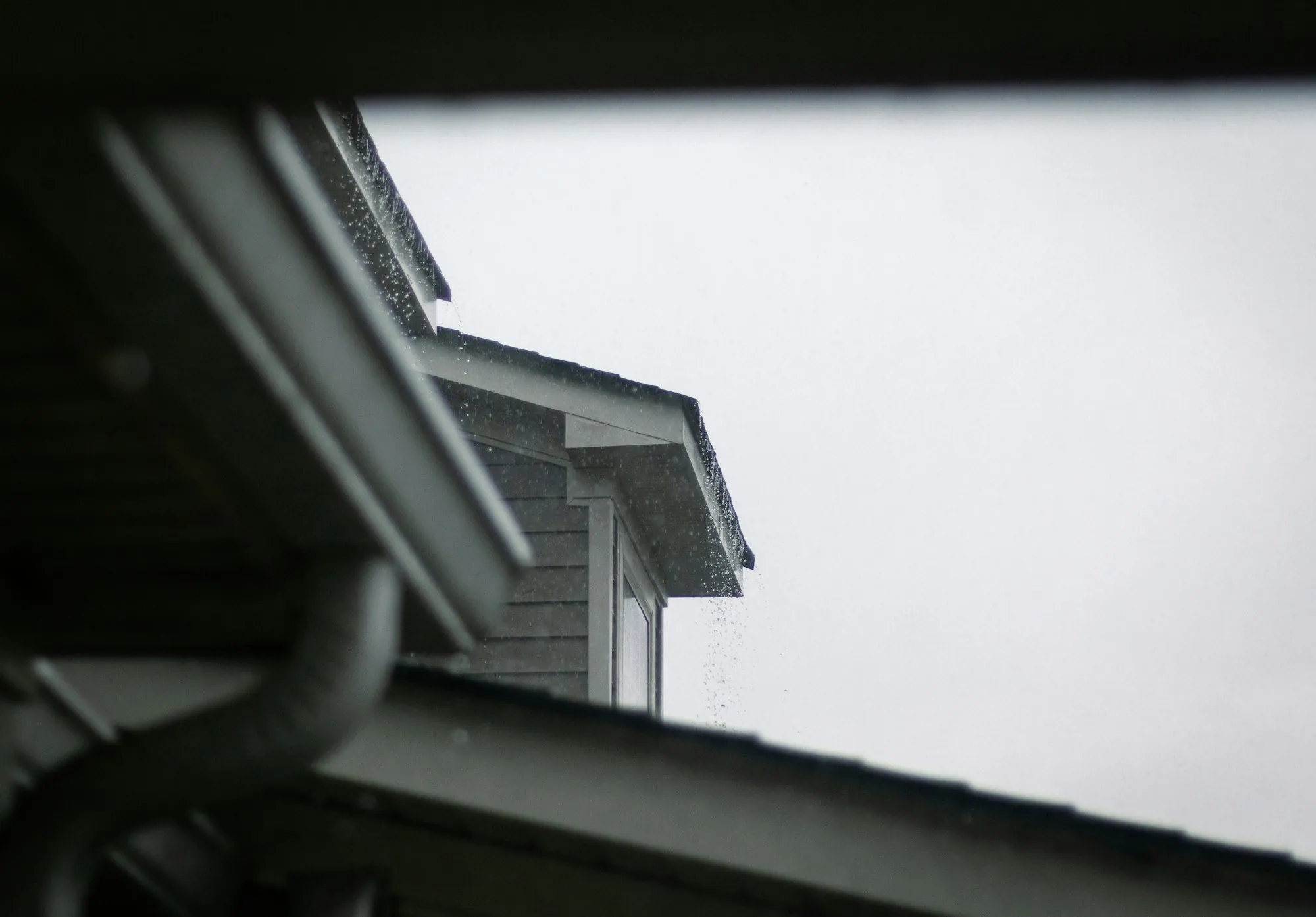
Rainwater arriving at an eave is a function of the roof area draining to it and how fast that roof sheds — a steep slope delivers the same volume in less time than a shallow one. A given gutter profile with a given number of outlets can carry so much and no more. Exceed it and water goes over the front lip every time it rains hard, which gets diagnosed as a blockage, cleaned, and then does it again. The fix is sizing, not cleaning.
Formed to the exact length of each eave, so joints exist only at corners and outlets rather than every few feet.
Five-inch handles the majority of houses here. Larger or steeper roofs get six-inch with a bigger downspout, which costs less than an annual overflow.
Screw-fixed into sound fascia at proper centres with a genuine fall to each outlet. Spike-and-ferrule fixings loosen and flatten the pitch.
Long eaves need two. Water that cannot drain fast enough leaves over the front edge, and that is the overflow most people blame on leaves.
Extensions or buried runs that put water well clear of the foundation rather than beside it.
Rotten boards replaced and drip edge fitted first. Hanging new gutters on soft timber guarantees a return visit.
Free assessment of the existing runs and a written price for correcting them.