
No junction without an owner
Where a slope meets a wall there is flashing, a kick-out and cladding lapping over the top — three parts, normally two trades, and no single name on the whole detail. One crew means one person is answerable for it.
The roof, the wall under it and the drainage that carries water off both — handled by one crew across Washington Township and Gloucester County, so nothing falls between trades.
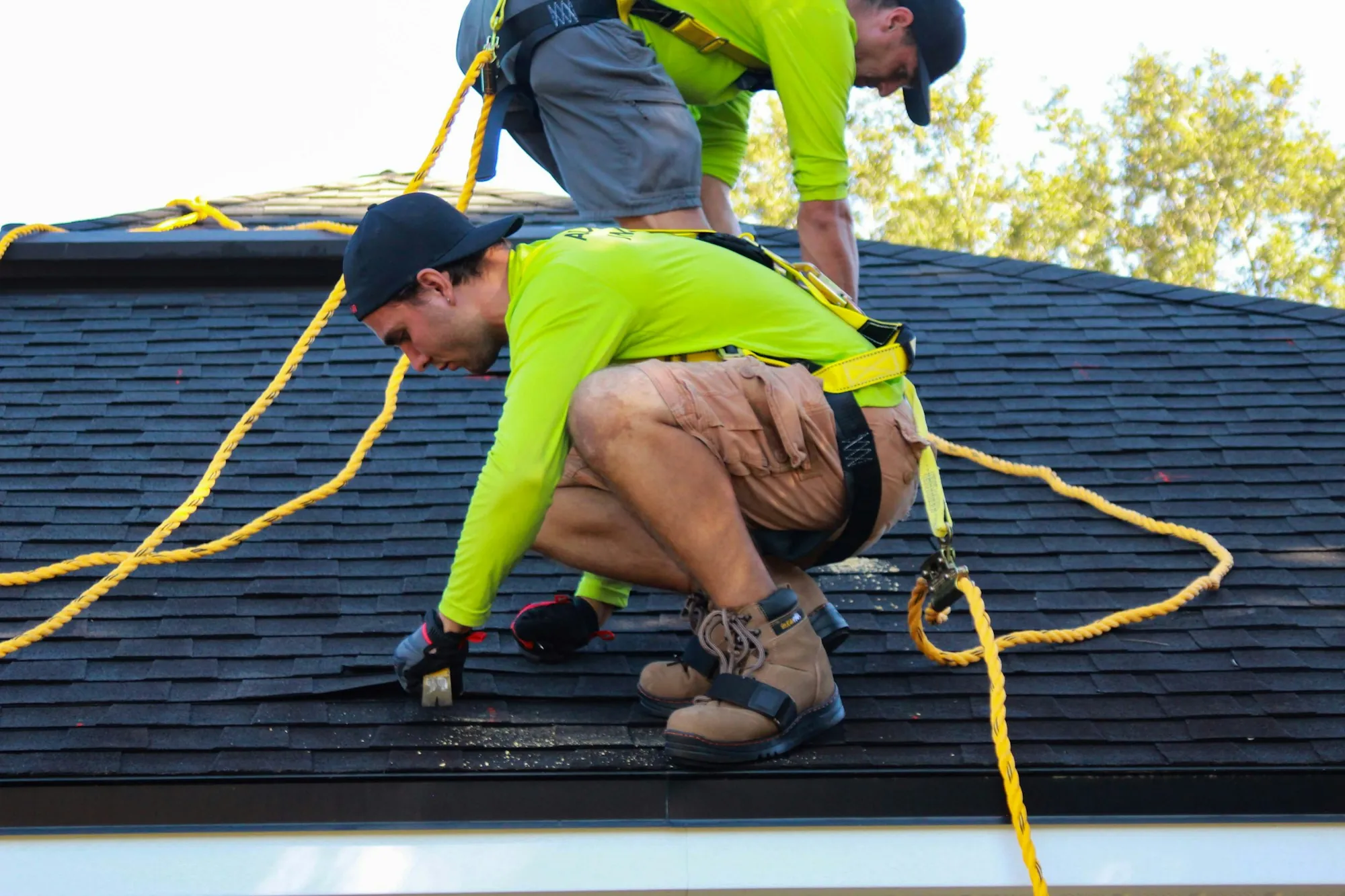
A free inspection of the roof, the siding and the drainage, and a written line-item number from that same visit.
Each has a page of its own covering scope, exclusions and the circumstances under which we would talk you out of it.
A complete system renewal, backed by a manufacturer workmanship warranty rather than a handshake.
Read more →Isolated failures put right properly, so a sound roof keeps the years it still has.
Read more →Working backwards from the damage to the opening, so the thing that gets sealed is the thing that leaked.
Read more →An evidenced assessment after wind or hail, so the decision is yours and based on something.
Read more →A dated, photographed condition record — the document a sale, a claim or a decision actually needs.
Read more →The wall below the roof, handled by the same crew — so the junction between them has one owner.
Read more →Drainage designed for the roof it serves, rather than whatever length the last installer had on the van.
Read more →Roof, wall and drainage are one system with three invoices in most of the industry. That split is where the problems live.
Where a slope meets a wall there is flashing, a kick-out and cladding lapping over the top — three parts, normally two trades, and no single name on the whole detail. One crew means one person is answerable for it.
Installation covered for 25 to 30 years and backed by the manufacturer, which is a different thing from the warranty on the shingles themselves. You get both documents, not a verbal assurance.
Accreditation that exists outside our own website, which is the only kind worth mentioning. It gives you somewhere to go that is not us if something goes wrong.
Somebody is on the roof and in the attic before a number exists. A quote produced any other way is a prediction, and predictions get corrected halfway through a job.
What the deck looked like once it was open, which sheets were replaced, the flashing before and after. Handed over at the end as a set, whether or not anything surprising turned up.
Describe what you are seeing. A good number of problems get usefully narrowed down before anyone drives anywhere.
Slopes walked, penetrations photographed, attic checked where reachable. Free, and the findings are yours regardless of what happens next.
Quantities and rates, line by line, with the photographs behind each recommendation. Where a repair and a replacement are both defensible, you get both.
The township application goes in under our name, the fee is passed through at cost as a separate entry, and somebody from the crew meets the inspector. You are given a start date together with what happens to it if the forecast turns.
Waste leaves continuously rather than accumulating, a magnet goes over drive, beds and lawn, and the closing invoice is laid out so every figure on it can be traced back to a line you already approved.
A building envelope sheds water through three connected systems: the covering that takes the rain, the cladding that protects the walls, and the drainage that moves it away from the foundation. Treat them as three separate purchases from three separate contractors and the gaps between them become nobody's responsibility — which is why so many persistent leaks live at junctions rather than in the middle of a roof slope. Treating the envelope as one job is not an upsell. It is how the water actually behaves.
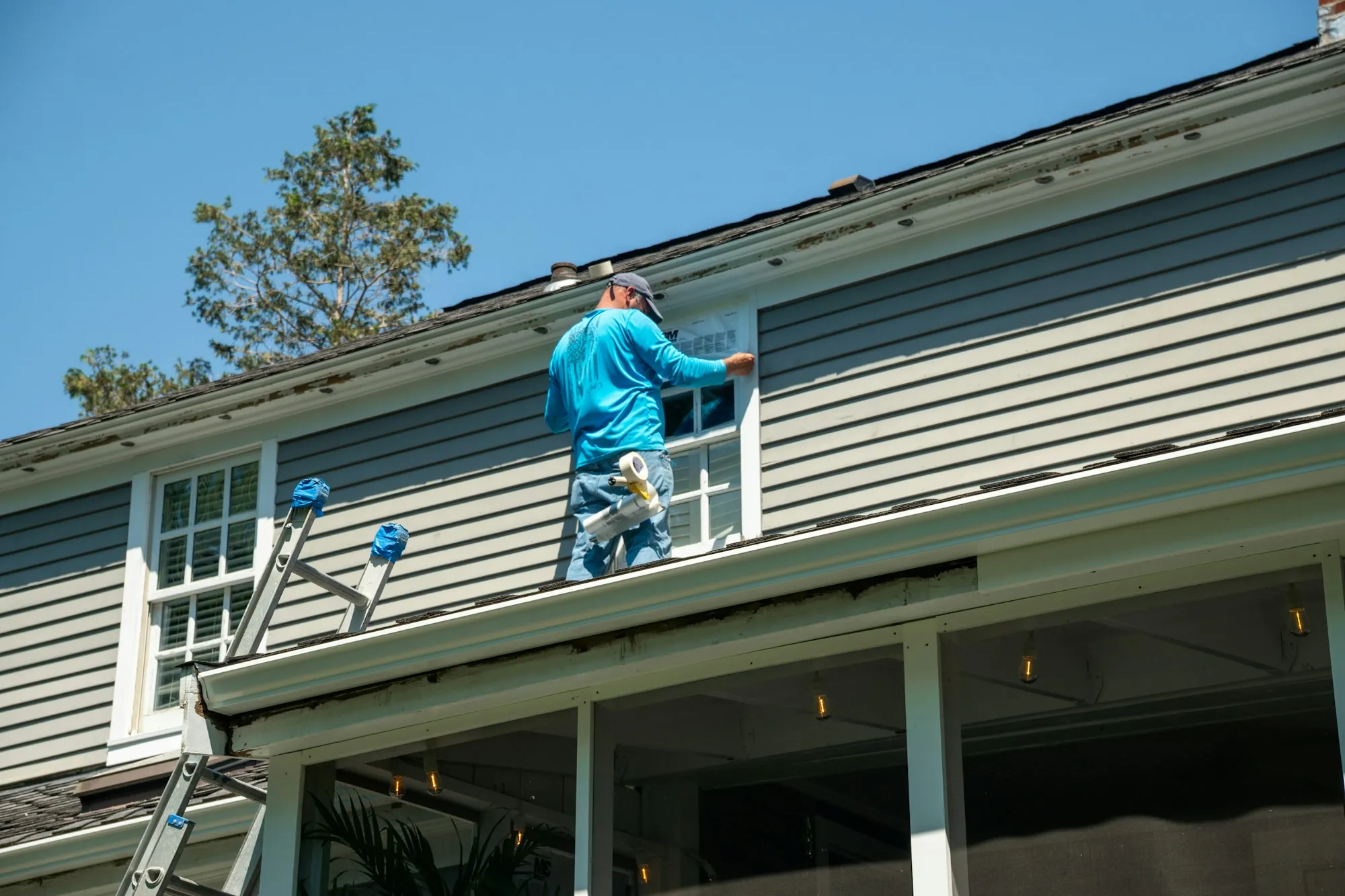
Washington Township and the Gloucester County towns next to it. Close by but not listed? One call settles it.
Roof, siding and gutters looked at together, photographed, and written up. It costs nothing and commits you to nothing.
Two separate things, and it is worth keeping them apart. The shingles carry a manufacturer material warranty running up to fifty years, which covers the product itself. The installation carries a manufacturer-backed workmanship warranty of twenty-five to thirty years, which covers how it was fitted. The second one is the one that matters when a roof leaks in year six, because almost every early failure is an installation issue rather than a product defect. You get both documents in writing.
The distinction is whether the failure is local or systemic. A ruined valley, split boots, failed step flashing or wind damage along one exposed slope are local, and they are repairs on an otherwise sound roof. Granules filling the gutters off every elevation, a mat that cracks when lifted, widespread nail pops or a second layer cooking the one beneath are systemic, and no number of patches will outrun them. Forty minutes on the roof tells us which you have, and the photographs let you see it too.
Because it quietly decides how long your roof lasts. A roof assembly needs air entering low at the soffits and leaving high at the ridge. If intake is blocked by insulation or exhaust is undersized, the attic runs hot, the underside of the deck cooks, and a thirty-year covering can give up in twenty. It also drives winter ice problems at the eaves and, in bad cases, mould on the sheathing. It is cheap to get right during a replacement and awkward to fix afterwards.
Almost always capacity rather than blockage. The volume arriving at an eave depends on how much roof drains to it and how steeply that roof sheds; a given gutter profile with a given number of outlets can carry a certain amount and no more. If the roof above is large, steep, or has a valley dumping into one spot, a clean five-inch gutter with a single downspout will still spill in heavy rain. Larger profile, bigger outlet or a second downspout fixes it permanently.
Not necessarily, but it is worth five minutes while somebody is already there. The place roofs most often leak into a building is where a slope runs into a wall, and the repair involves flashing that sits underneath the cladding. If the siding is in poor condition at that junction, a roof-only fix can be undone by the wall. Where the siding is sound we will say so and leave it alone.
A straightforward replacement on a house this size is two days — strip and dry in on the first, covering and detailing on the second. Repairs are usually a single visit, often under half a day. Gutter runs take a morning. Time is added by steep pitch, a second layer that has to be removed, significant sheathing replacement, and awkward access for a container. The inspection establishes all four in advance, which is what stops a two-day job quietly becoming four.
Not before materials are ordered. There is no reason for a homeowner to be funding a contractor's working capital, and a large deposit taken early is the single clearest warning sign in this trade. Payment is structured around actual milestones, set out on the estimate before you agree to anything.
It goes into the container as the work proceeds rather than accumulating on your lawn to be dealt with at the end. We run a magnet across the driveway, the beds and the grass before leaving each day, and again the next morning if a day ran long. Nails in a tyre a fortnight later is the thing we least want you to remember us by.
Free, thorough, written up, and yours to keep whatever you decide to do next.